
“Blind signing” remains a top vector for DeFi losses — and transaction simulation changes the math. Rabby Wallet installs like a typical extension or app, but its operational model (transaction simulation, approval revocation, automatic network switching) shifts what “secure setup” actually looks like. For US-based DeFi power users who handle cross-chain positions, hardware keys, and institutional flows, installation is the start of an operational discipline, not the finish line.
This article walks through a practical installation-and-onboarding case: how an active DeFi trader with positions on Ethereum, Arbitrum, and Polygon should install, configure, and validate Rabby Wallet to minimize attack surface while keeping workflow efficiency. I’ll explain the mechanisms that make Rabby different, the trade-offs you face during setup, the limits you must accept today, and the behavioral heuristics that will actually reduce risk.
Step-by-step install and initial hardening
Start where your browser ecosystem lives. For most US DeFi users that means a Chromium-based browser (Chrome, Brave, Edge). Install the Rabby extension from the official source, then immediately confirm two things before importing funds or importing a seed: (1) the extension ID and publisher match the known release notes on the project’s official channels; and (2) your browser is updated to remove known extension vulnerabilities. Rabby is also available as a mobile app and desktop client; choose the platform that minimizes your exposure based on how you trade (desktop for active DEX work, mobile for occasional approvals).
When you create or import a wallet, prioritize hardware integration. Rabby supports Ledger, Trezor, Keystone and others — pairing a hardware device converts a software-only hot wallet into a hybrid model where signing keys never leave the physical device. For power users with sizable positions, combine a primary hardware wallet for day-to-day DEX trades with a multi-sig scheme (e.g., Gnosis Safe) for treasury-level moves; Rabby integrates with popular enterprise custody providers like Fireblocks and Amber, which lets you route large transfers through institutional controls while keeping smaller tactical trades fast.
Why the transaction simulation matters — mechanics, not magic
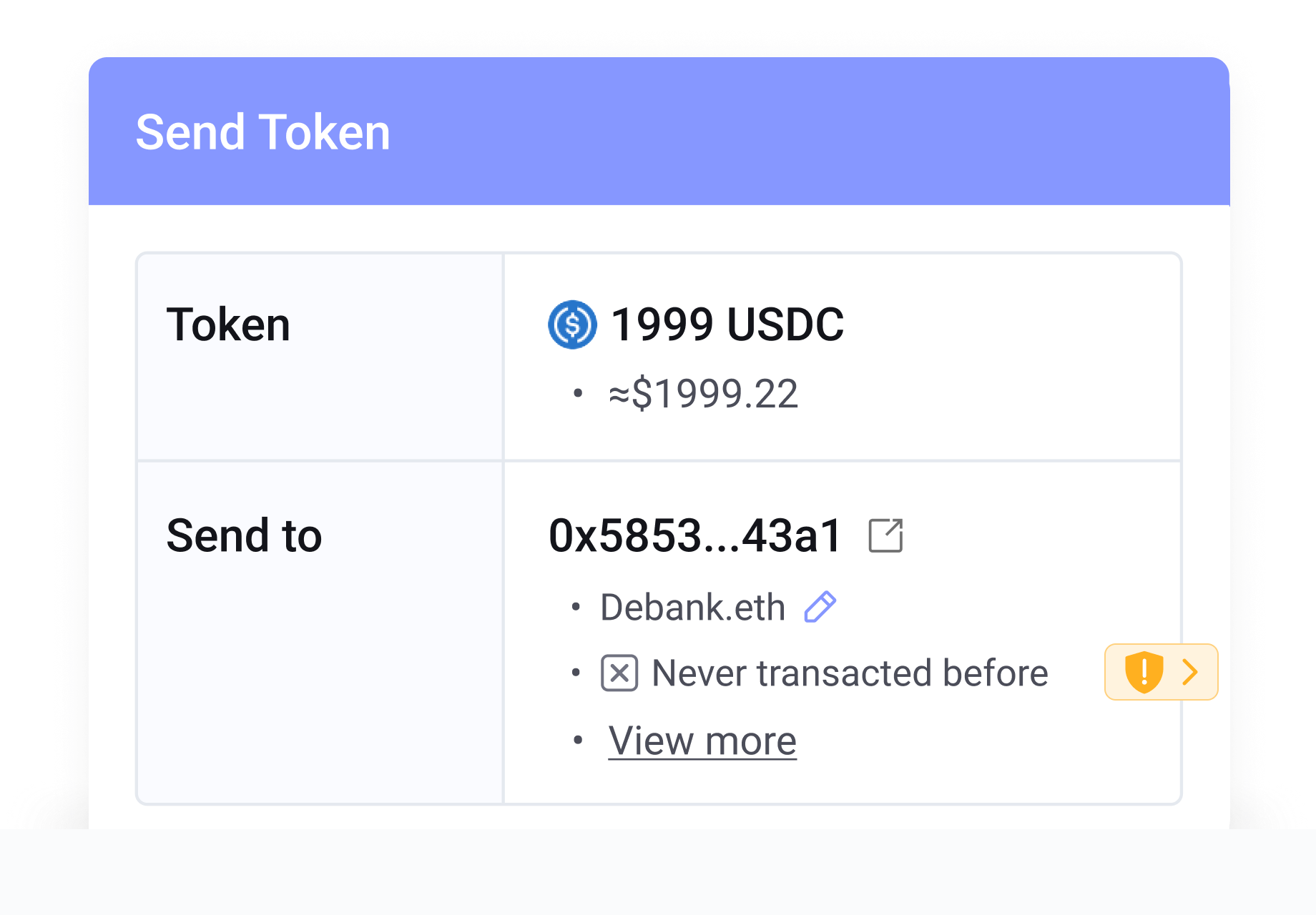
Rabby’s signature differentiator is its transaction simulation. Mechanically, before you sign, the wallet runs the transaction through a local or remote simulation engine that computes estimated token balance changes and fee costs, and checks the target contract against a risk database: previously hacked contracts, suspicious approval requests, or nonexistent recipient addresses. This prevents a lot of “blind signing” attacks where a user clicks through a signature that executes unintended token transfers.
But simulation is a safeguard, not an oracle. It depends on accurate state data and correct interpretation of contract logic. Complex multi-step contracts, obfuscated proxies, or time-dependent behaviors can slip past a simulation engine. Treat simulation as a tripwire: it catches many straightforward, high-risk mistakes and makes obscure failures more visible, but it doesn’t guarantee safety for every bespoke contract interaction.
Approval revocation, automatic network switching, and workflow trade-offs
Two operational features change how you manage allowance risk. First, Rabby provides a built-in approval revocation tool: you can list and cancel token approvals you previously granted to contracts. This reduces the window of exposure if a contract is later compromised. Second, automatic network switching detects the dApp you visit and switches chains. That saves time and prevents accidental transactions on the wrong network, but it also increases the importance of checking the URL and contract address — automatic switching is a convenience that can lull power users into complacency if they rely on it without verifying recipient addresses.
Trade-offs: enable automatic switching to reduce human error when moving across chains, but keep a habit of verifying addresses for high-value flows. Use approval revocation proactively: a simple heuristic is to revoke approvals after completing a trade unless you have a compelling reason to keep long-lived allowances for automated strategies.
Cross-chain gas top-up, portfolio visibility, and multi-chain complexity
Rabby supports over 90 EVM-compatible chains and includes a cross-chain gas top-up feature. Practically, that reduces friction when you need to bridge or interact on a chain where you lack native gas. Mechanism: the wallet sends gas tokens to the target chain to enable execution. This is a usability win, but it creates additional operational complexity: you must track gas balances across chains and consider the routing that funds take. For example, funding gas on a layer-2 through a bridge exposes you to bridge risk and additional on-chain steps.
On the plus side, Rabby’s dashboard aggregates tokens, NFTs, and DeFi positions across connected chains. That visibility is valuable for decision-making: it reduces cognitive load and helps you see cross-chain exposure. However, aggregation does not eliminate the need to audit positions on-chain; if your asset value is large, independently verify holdings with on-chain explorers, especially after any third-party integration or plugin update.
Security history and what it teaches
Context matters. Rabby experienced a Rabby Swap contract exploit in 2022 resulting in losses; the team froze the contract, compensated users, and increased audits. That episode is instructive in two ways. First, it shows a security process: fast incident response and remediation can materially reduce damage. Second, it highlights that even wallets focused on security can be affected by ancillary smart contracts. The lesson for power users is to separate trust boundaries: trust the wallet’s signing and simulation tools, but treat any in-wallet swap or integrated contract as a third party — run extra checks before committing material funds.
Limits you must accept today
Be explicit about limits. Rabby does not provide a fiat on-ramp inside the wallet, and it lacks native staking features. That means US users who want direct fiat purchases must use external on-ramps and then transfer tokens — introducing KYC, custody, and bridging steps that change trust assumptions. Also, simulation and risk scanning are strong mitigations but not failproof: novel contract exploit patterns, flash loan manipulations, or oracle attacks can still produce signed transactions that appear normal in simulation but behave badly on-chain.
Operational implication: for high-value actions, adopt multi-tier defenses — hardware signing, multi-sig for treasury moves, manual code review or third-party audits for unfamiliar contracts, and on-chain verification of simulation outputs where possible.
How Rabby compares to alternatives — focus on what matters
MetaMask, Trust Wallet, and Coinbase Wallet remain common choices. Rabby’s practical differences are its transaction simulation, approval revocation UI, and automatic network switching. For a DeFi power user, these features change behavior: simulation reduces blind signing risk; revocation shortens the window of exploit; automatic switching lowers friction across chains. The trade-off is complexity — you must trust the simulation engine, manage more cross-chain state, and stay disciplined about revocations and hardware integration.
If your workflows are institutional or treasury-sized, Rabby’s integrations with Gnosis Safe and enterprise custodians like Fireblocks matter. They allow Rabby to sit at the intersection of individual trader ergonomics and institutional control frameworks.
Decision-useful heuristics and a short checklist
Use these heuristics the next time you install or evaluate Rabby:
– Default to hardware-first: pair a hardware wallet immediately for high-value accounts.
– Revoke by default: apply the “revoke after use” rule for token approvals unless automation requires a standing allowance.
– Treat simulation as a warning system, not absolute proof. If simulation flags unusual fund flows, stop and investigate the contract code or call on-chain experts.
– Segment funds: keep tactical trading balances separate from long-term holdings under multi-sig or institutional custody.
– Audit any in-wallet integrated contract before routing significant liquidity through it, including Rabby Swap or third-party aggregators.
For readers who want to learn more about the wallet, here’s the official project page: rabby wallet.
What to watch next
Near-term signals that would change these recommendations: improved on-ramp integrations (which would reduce off-wallet KYC friction), tighter simulation coverage for nonstandard contract patterns, or broader hardware-backed multi-sig UX that makes large-treasury moves fast enough for active trading. Conversely, novel attack patterns that defeat simulation (for example, state-dependent exploits only visible from certain mempool conditions) would raise the bar for operational discipline.
In practice, adoption of wallets that combine simulation with institutional plumbing will increase as DeFi matures. But users should not outsource judgment to tooling: the best outcome combines strong tooling, layered custody, and a habit of independent verification.
FAQ
Is Rabby safe enough to use as my primary trading wallet?
Rabby includes strong safety features — transaction simulation, approval revocation, hardware wallet support — that lower risk compared to many alternatives. “Safe enough” depends on the size of your positions and threat model. For small tactical balances, hardware-backed Rabby with routine revocation is reasonable. For larger holdings, pair Rabby with multi-sig custody and institutional controls; treat in-wallet swaps and third-party contracts as untrusted until audited.
How reliable are Rabby’s transaction simulations?
Simulations are effective at exposing straightforward mismatch and blind-sign hacks because they compute token flows and fees before the signature. They can fail on highly complex contracts, proxy patterns, or oracle-dependent behaviors. Use them as a powerful screening tool, but not as absolute safety — if a transaction is high-value or unusual, supplement simulation with code checks or third-party audits.
Can I use Rabby with my Ledger or Trezor?
Yes. Rabby integrates with major hardware wallets so signing keys remain on-device. For the strongest protection, use hardware signing for day-to-day trades and combine that with multi-sig for treasury-level operations.
Does Rabby support staking or fiat purchases inside the wallet?
No. Rabby currently lacks a built-in fiat on-ramp and doesn’t offer native in-wallet staking. You will need to use external fiat on-ramps and staking providers, which introduces extra custody and KYC steps.
What should I do if a simulation flags an approval request as suspicious?
Stop. Do not sign. Verify the contract address using an independent on-chain explorer, check for audit reports or whitepapers, and, if necessary, ask the dApp team for clarification. If it’s a third-party contract you must interact with regularly, consider creating a controlled allowance and monitoring its activity rather than full approval.